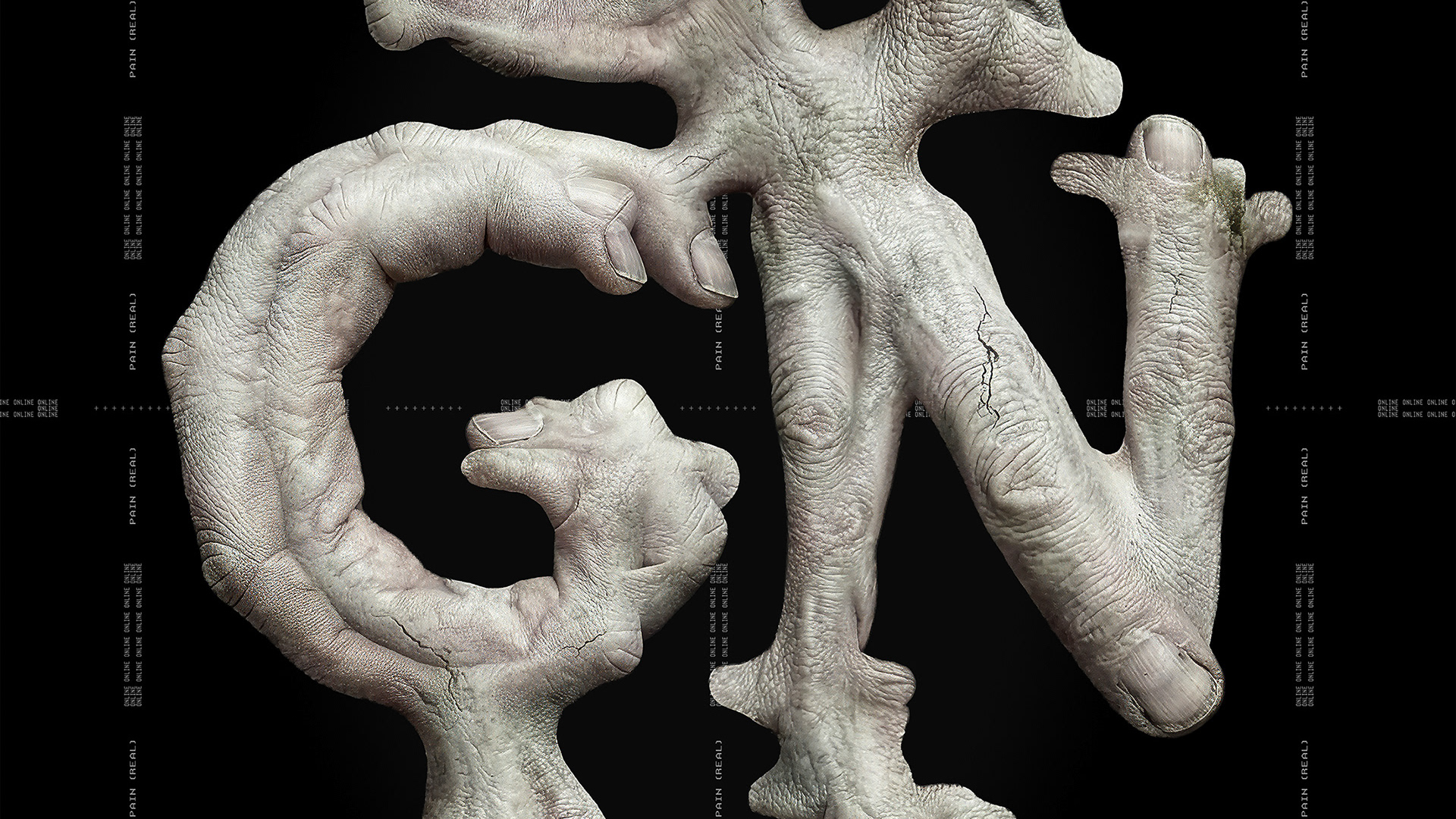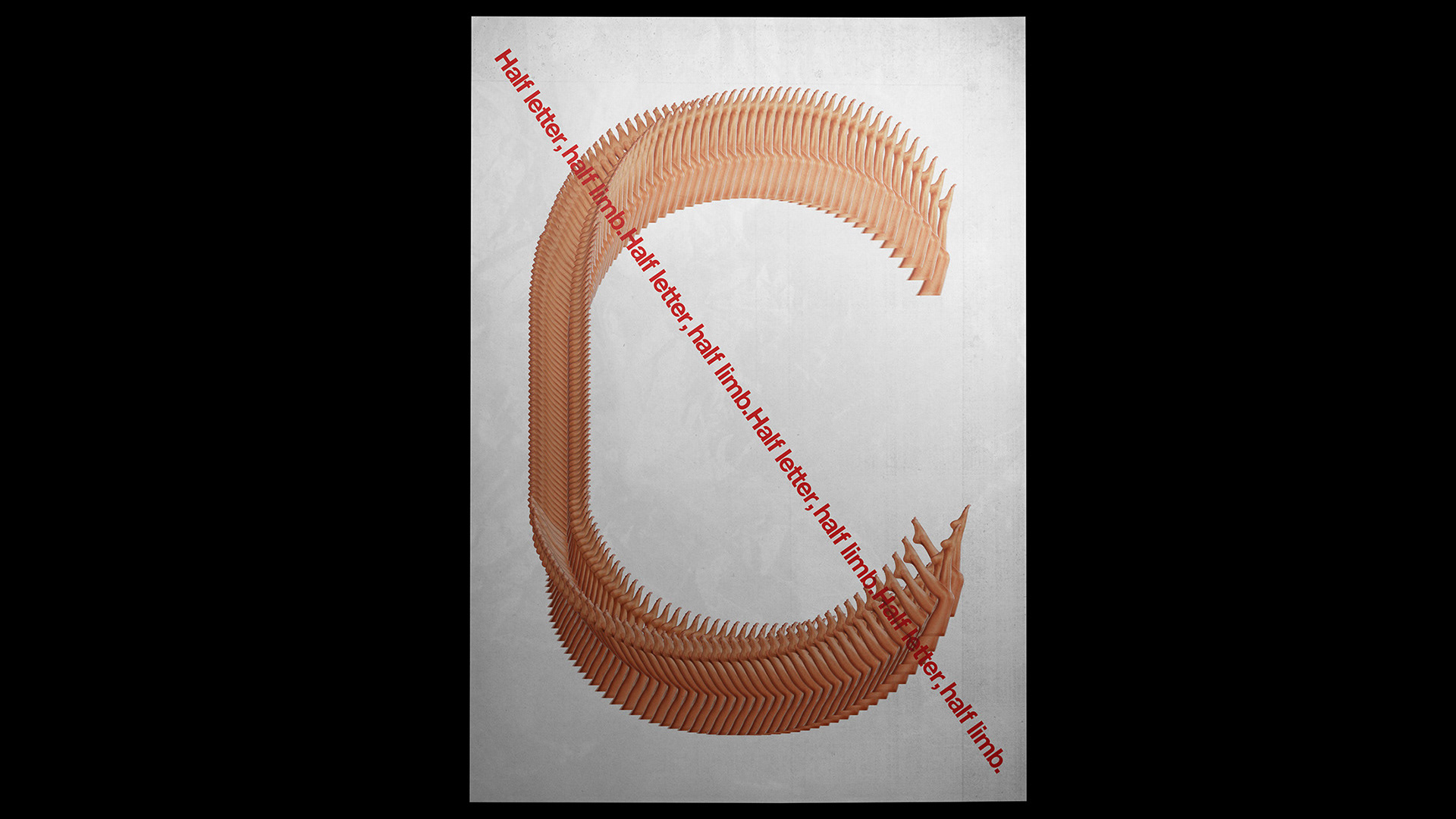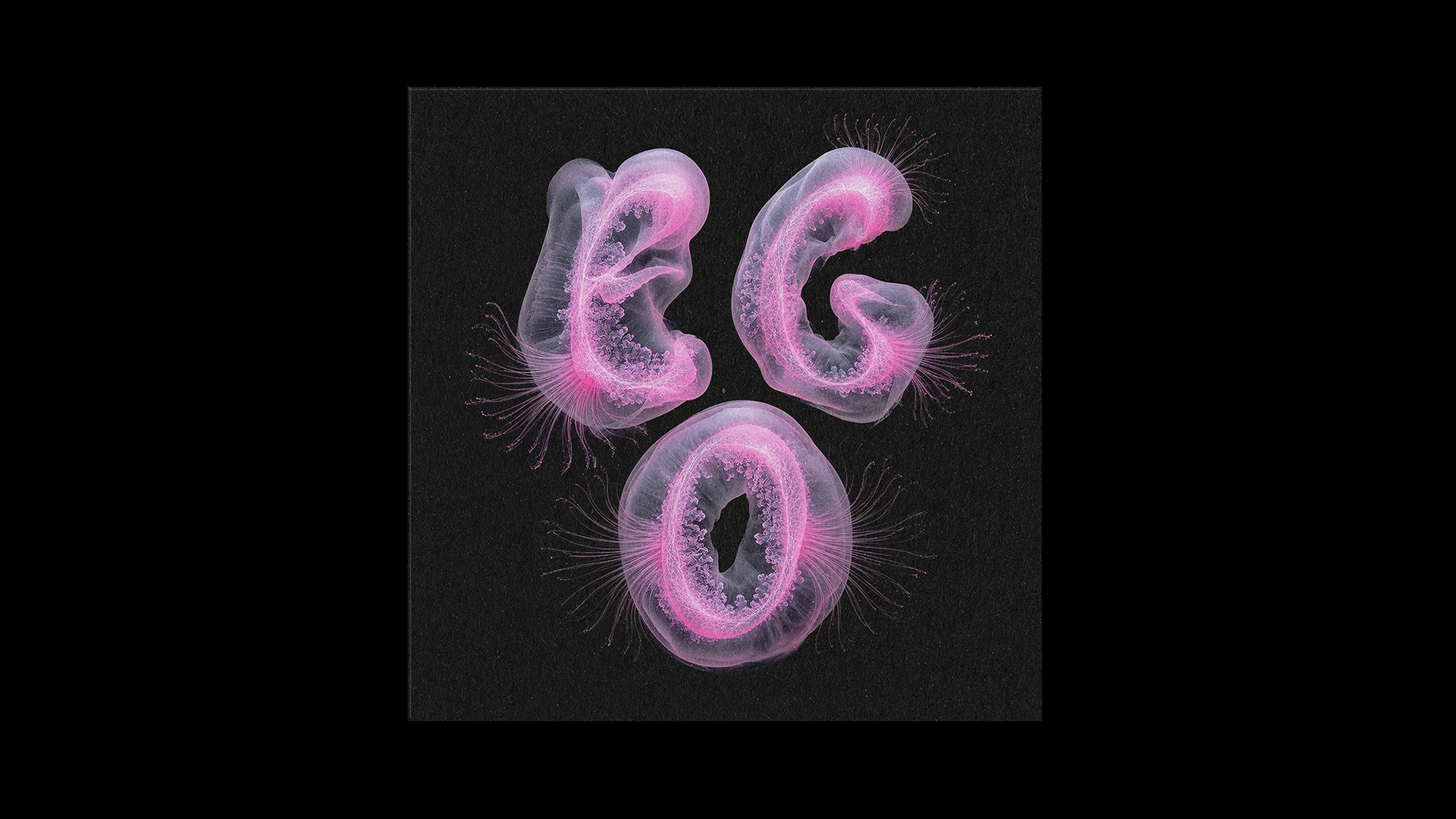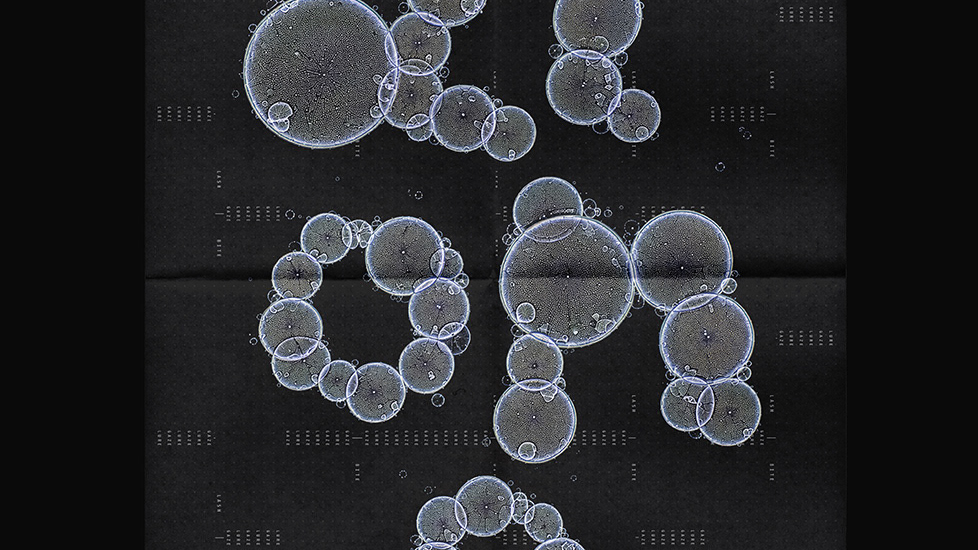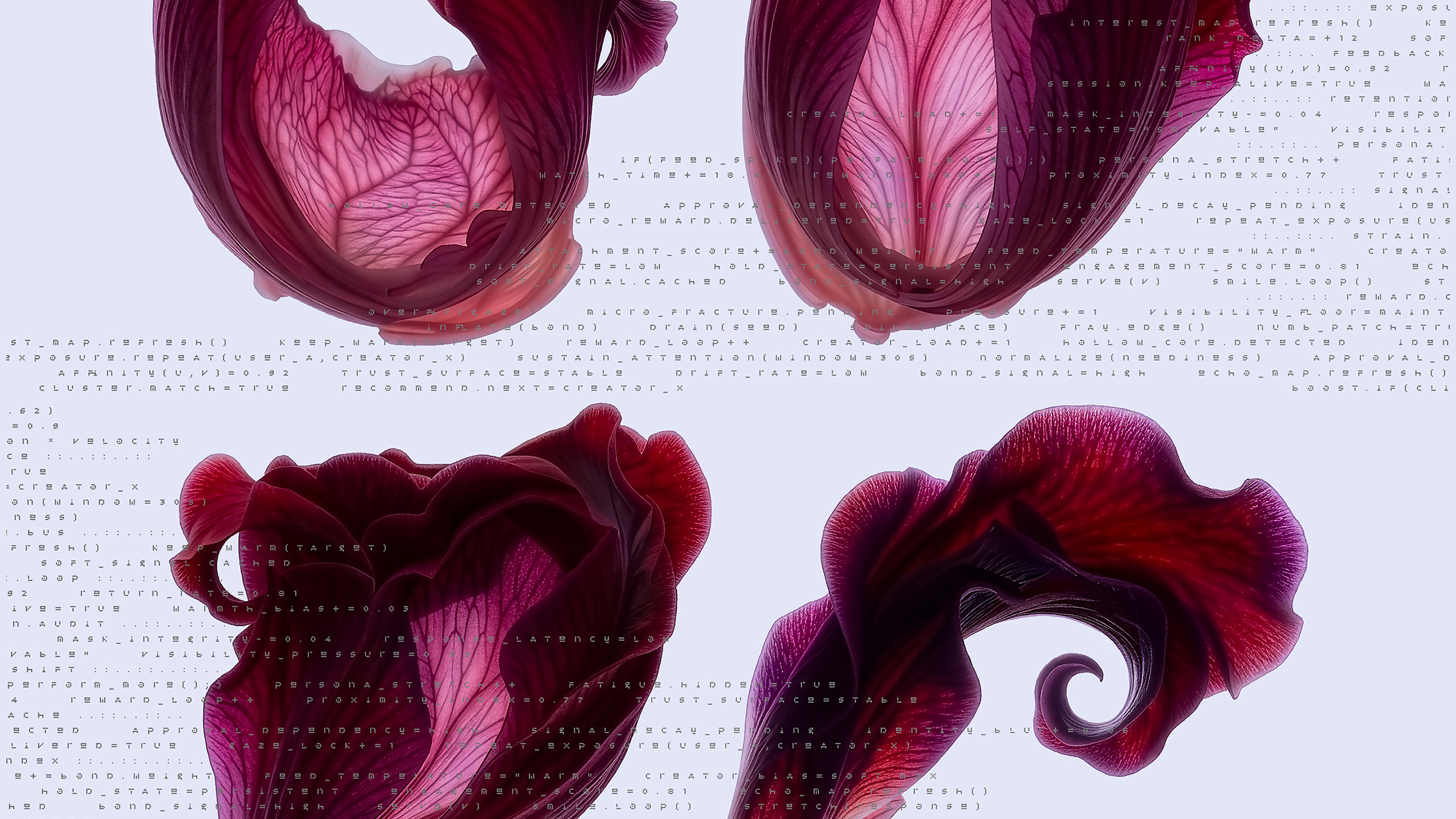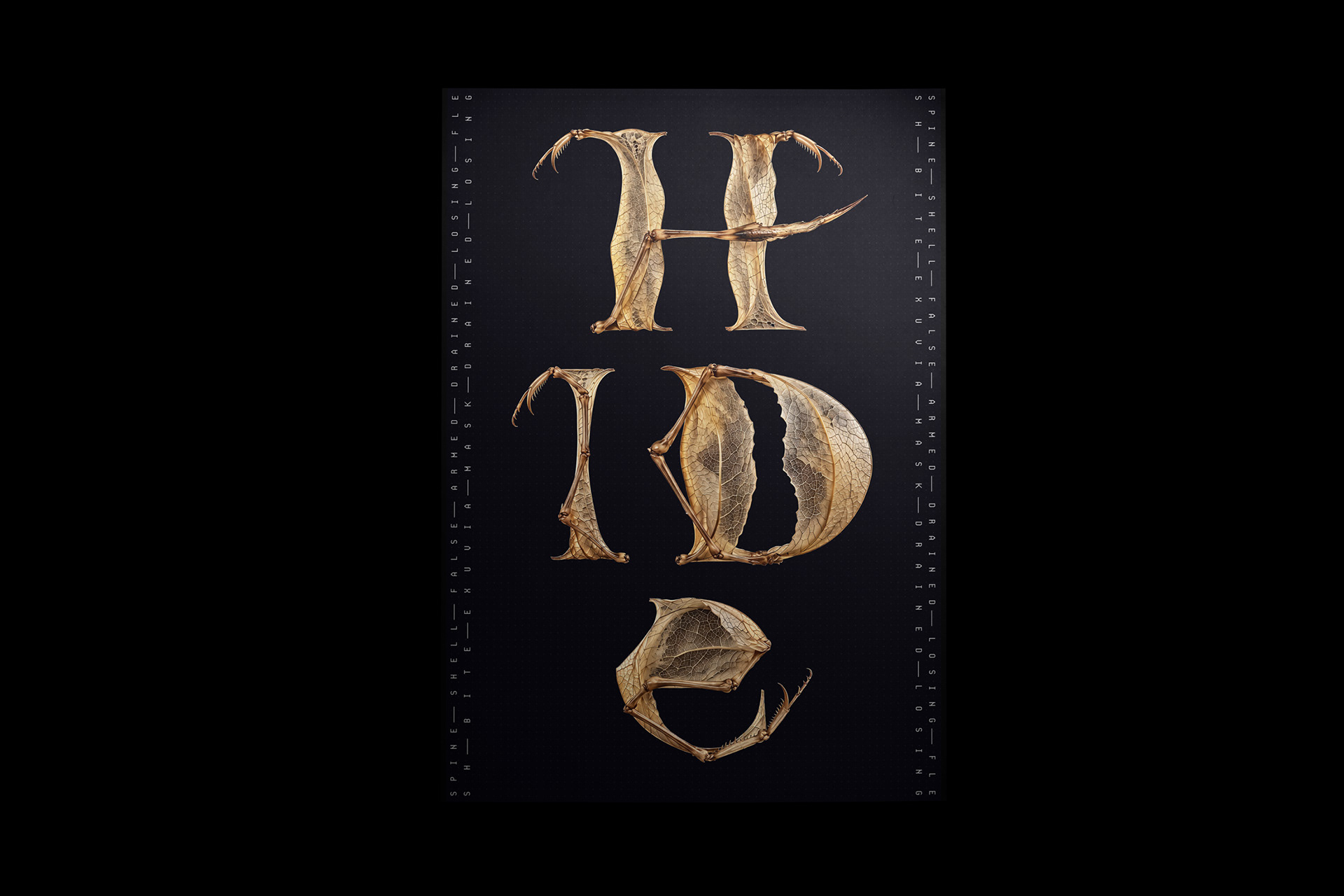
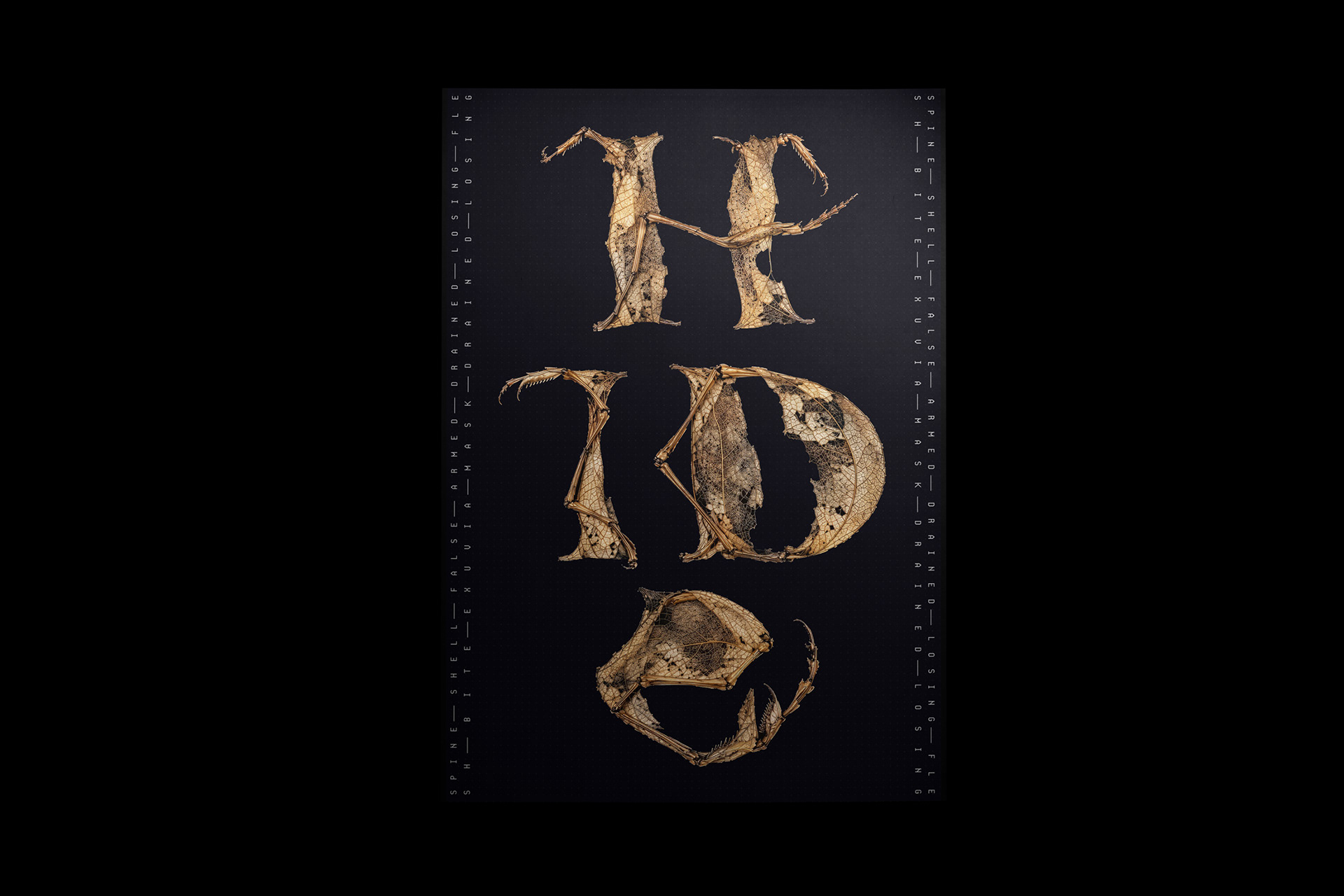
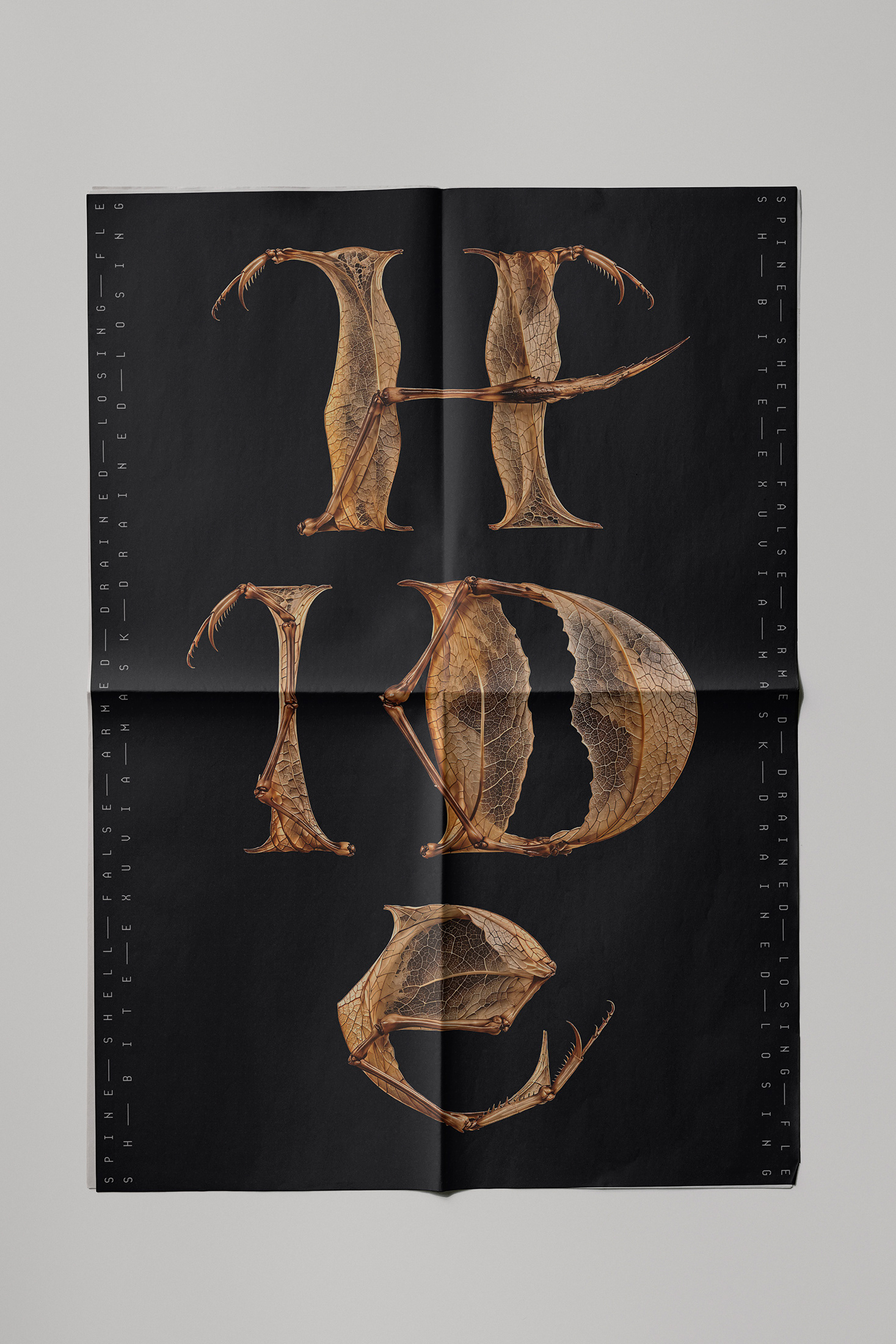
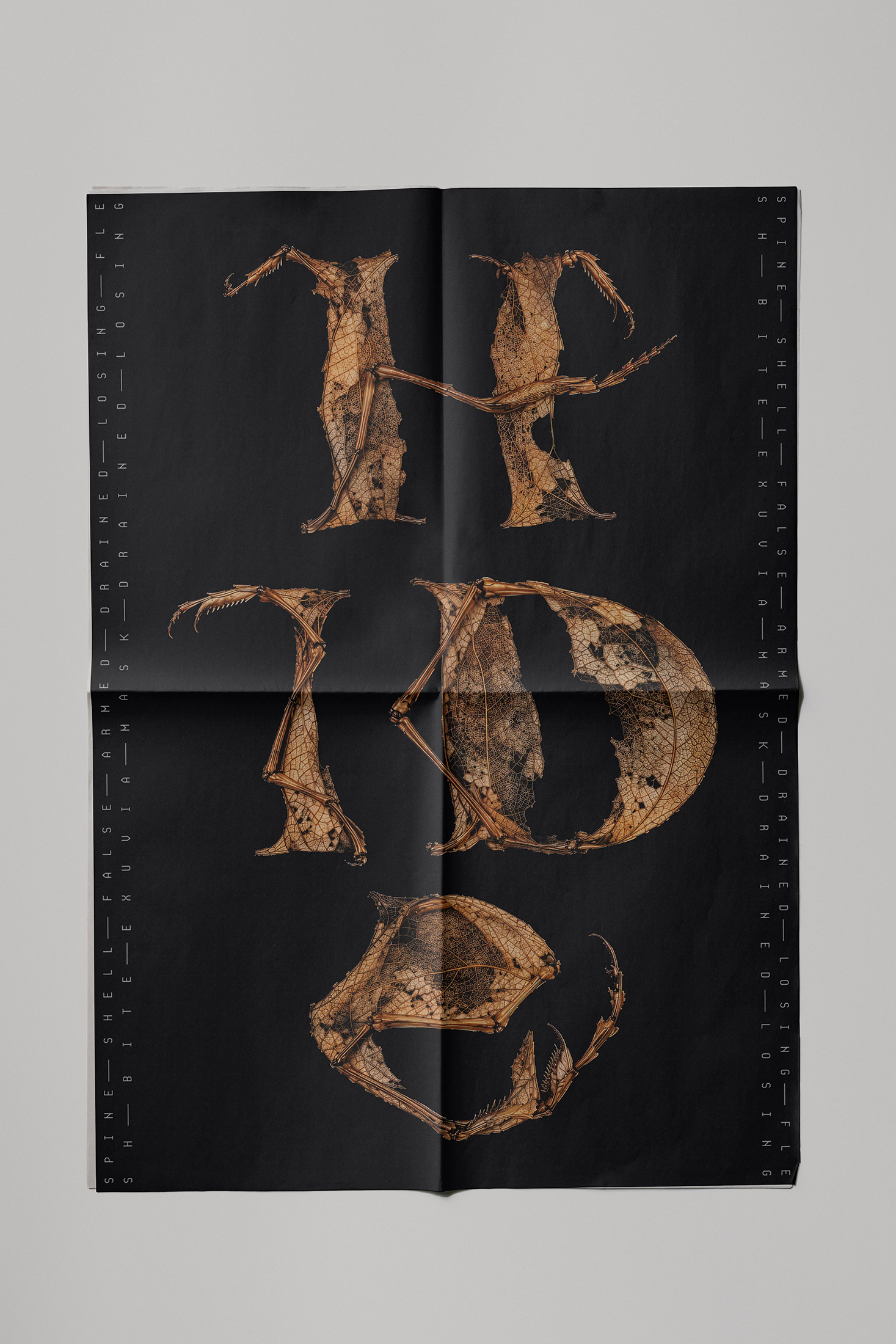
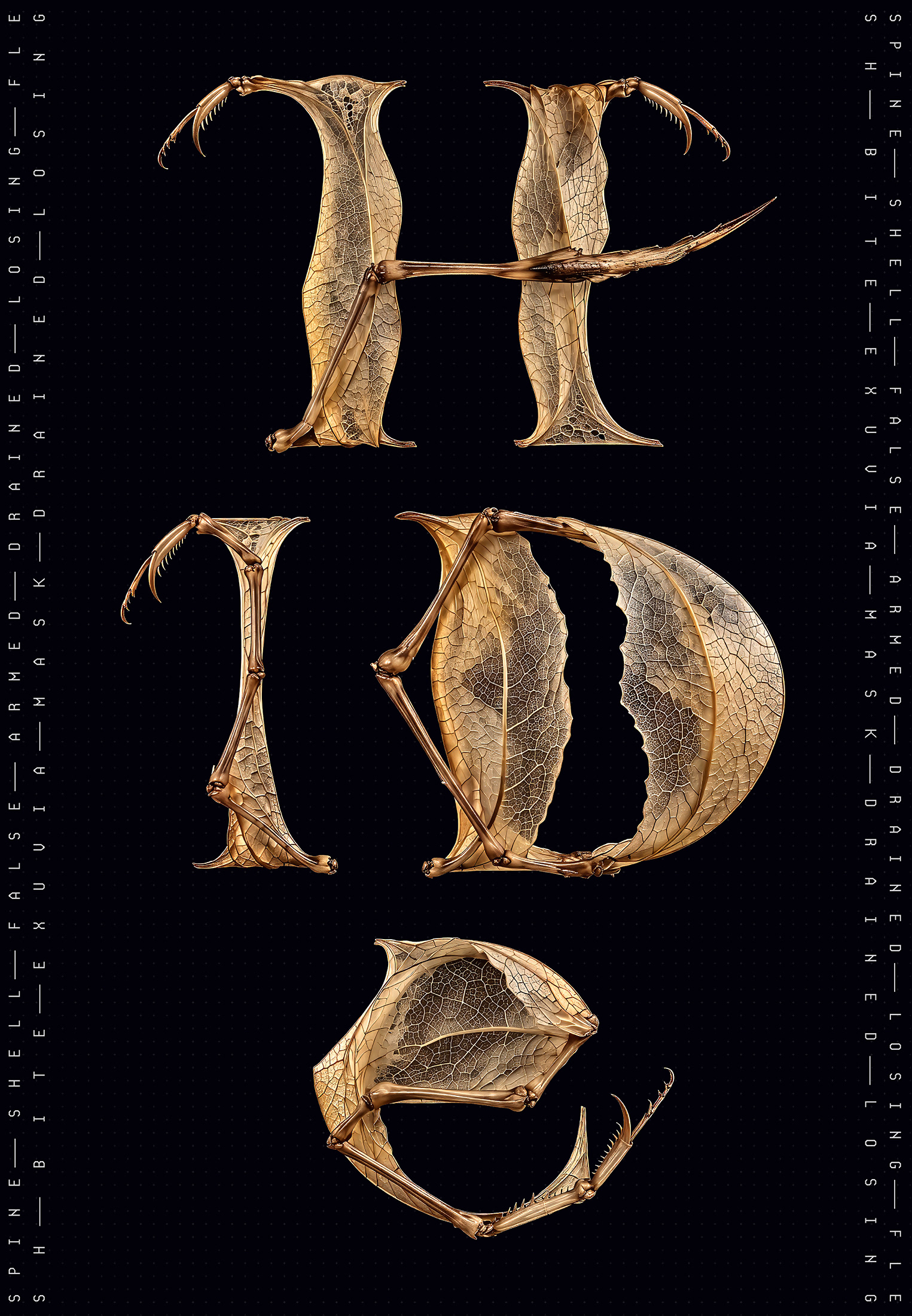
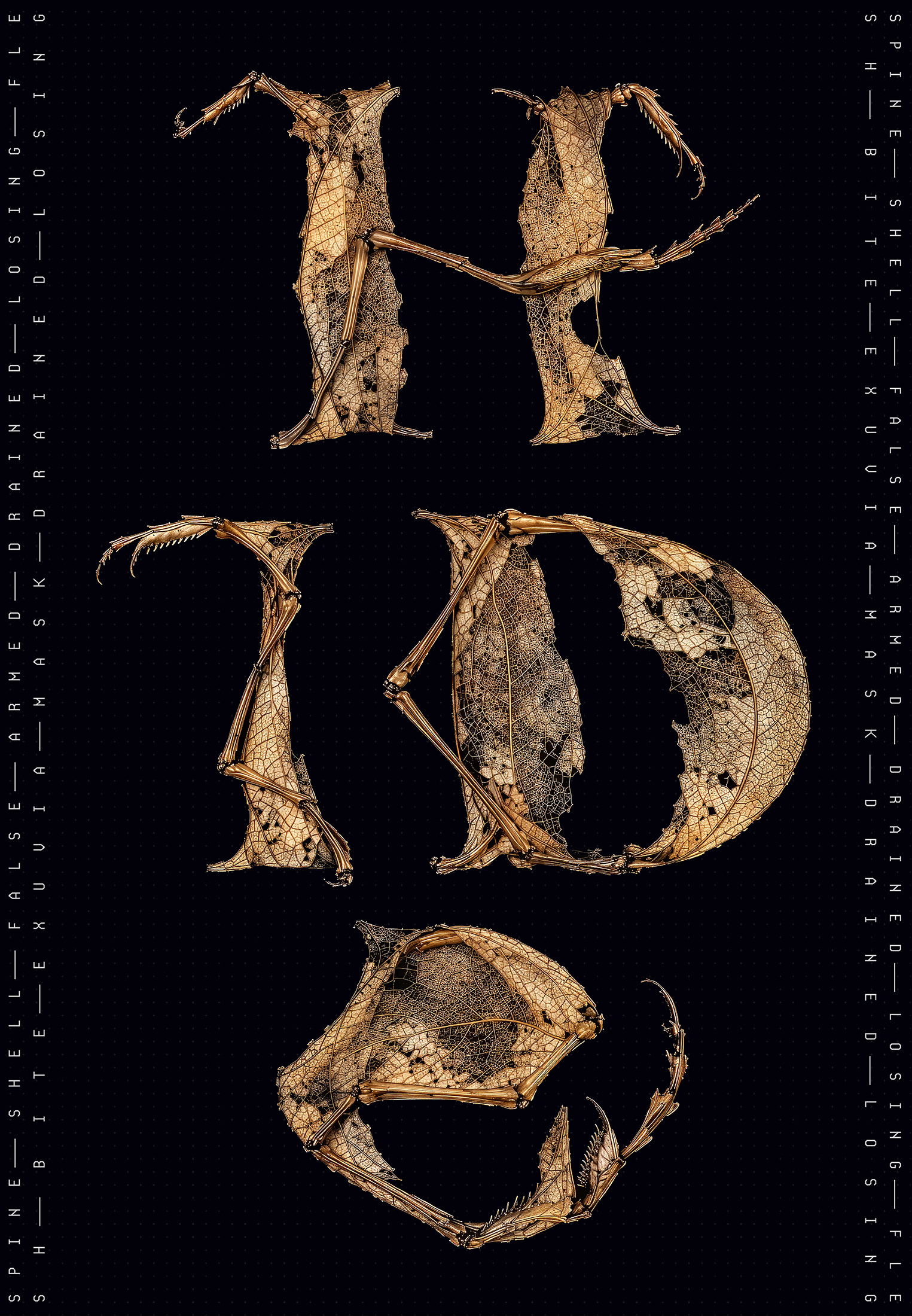
本作は、SNS時代における人間の「自己顕示」と「隠蔽」という二面性をテーマにしたデザインアートです。SNS上の発信者は、自らを魅力的に演出し、他者の視線や反応を引き寄せながら、その関係性を取り込んでいく強さ=「捕食性」を持っています。その一方で、自身のイメージを損なう事実や都合の悪い情報については、痕跡や気配を薄め、巧妙に覆い隠していきます。そこでは、「見せること」と「隠すこと」が相反する行為ではなく、ひとつの自己像を維持するための連続した行為として共存しています。この「捕食」と「擬態」が同居する構造を、カマキリをはじめとする節足動物の生存戦略と重ね合わせました。昆虫の触覚、鋭利な鎌、翅脈や乾燥した外殻を組み合わせて形成されたバイオタイポグラフィ「HIDE」は、他者を惹きつけながら、自らに不都合なものを覆い隠して生きる現代人の姿を表しています。見せるために隠し、隠すために擬態する。本作は、SNS上で自己のイメージを守り続けようとする、本能的で、ときにグロテスクな隠蔽心理を視覚化した作品です。
This work explores the duality of self-display and concealment in the age of social media. On social platforms, those who broadcast themselves present carefully constructed and attractive versions of who they are, drawing in the attention and reactions of others. In this sense, they possess a kind of predatory force—the power to attract, capture, and absorb attention. At the same time, information or truths that threaten the image they have created are often obscured, softened, or quietly erased from view. Here, revealing and concealing are not opposites, but continuous acts performed in order to preserve a single constructed identity. This coexistence of predation and camouflage is connected to the survival strategies of arthropods, particularly the praying mantis. The bio-typography of “HIDE,” constructed from insect antennae, sharp raptorial limbs, wing veins, and dried exoskeletal forms, embodies the contemporary impulse to attract others while simultaneously hiding whatever is inconvenient or undesirable. We conceal in order to be seen, and camouflage ourselves in order to conceal. Through this work, I visualize the instinctive—and at times grotesque—psychology of concealment that emerges from the constant effort to maintain one’s image on social media.